
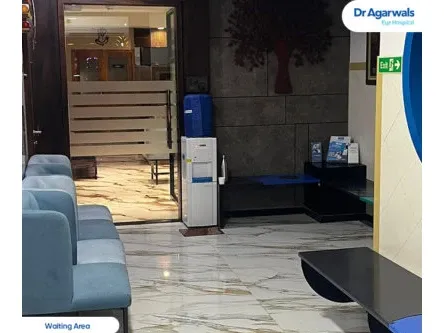
Dr Agarwals Eye Hospital - Thane, Maharashtra
Address
1st floor, 102, Soham Plaza, Tikuji Ni Wadi Rd, near Manpada Flyover, next to Titan Hospital, Manpada Naka, Manpada, Thane West, Thane - 400607
Opening Hours
Mail ID
care@dragarwal.com
Phone
Eye Treatments Available at Dr Agarwals Eye Hospital
Congenital Glaucoma
What is Congenital Glaucoma?
Congenital Glaucoma otherwise known as childhood glaucoma, infantile glaucoma or pediatric glaucoma is found to occur in babies and small children ( < 3 years of age). It is a rare condition but could result in a permanent loss of vision.
Congenital Glaucoma Symptoms
The symptoms and signs of childhood glaucoma include:
- Triad
- Overflow of tears onto the face (Epiphora),
- Involuntary twitching of the eye (Blepharospasm),
- Sensitivity towards the light (Photosensitivity)
- Enlargement of the eyes (Buphthalmos)
- Hazy cornea
- Closing of the eyelid
- Redness of the eye
Congenital Glaucoma Causes
- Build-up of aqueous humor inside the eye
- Genetic reasons
- Birth defects in ocular angle
- Underdeveloped cells, tissues
Congenital Glaucoma Risk Factors
From what is known the risk factors could be
- Family’s medical history
- Gender
Congenital Glaucoma Prevention
Even though congenital glaucoma cannot be fully prevented, complete vision loss could be prevented when diagnosed early. Some of the best ways to ensure we catch congenital glaucoma early are
- To have eye checkups often
- To be aware of your family’s medical history
Two types of glaucoma are
- Primary Congenital Glaucoma: which means that the condition is not a result of another condition at birth.
- Secondary Congenital Glaucoma: which means that the condition is a result of another condition at birth. For example, tumour, infections, etc.
Congenital Glaucoma Diagnosis
The doctor will conduct a thorough eye exam on the child. To make it easy for the doctor to visualize a small eye, the examination would be conducted in an operating room. The child would be under anaesthesia during the procedure.
The doctor will then measure the child’s intraocular pressure and carefully examine every part of the child’s eye.
The doctor would make a diagnosis only after considering all the symptoms, ruling out other ailments that caused the child’s problems.