
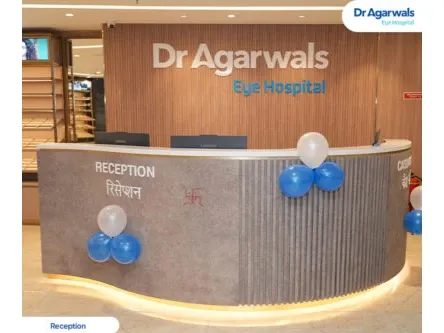
Dr Agarwals Eye Hospital - South Extension II, New Delhi
Address
D-16, South Extension - 2, South Extension II, New Delhi - 110049
Opening Hours
Mail ID
care@dragarwal.com
Phone
Corneal Ulcer (Keratitis)Treatment
Understanding Corneal Ulcers
A corneal ulcer is an open sore on the eye's clear front surface, usually resulting from infection, injury, or prolonged contact lens misuse.
Warning Signs to Act On
Redness, pain, light sensitivity, and blurred vision can develop quickly, and prompt treatment is essential to prevent scarring or vision loss.
Targeted, Rapid Treatment
Our specialists identify the underlying cause through detailed examination and begin focused antimicrobial or supportive therapy to heal the cornea effectively.
Seeking Care Quickly
Because corneal ulcers can progress rapidly, we recommend same-day evaluation for any sudden eye redness or pain, particularly for contact lens wearers.
Our Diagnostic Approach
Corneal scraping and culture testing help identify the specific organism responsible, allowing treatment to be matched precisely to the underlying infection.
Related Search
Corneal Ulcer (Keratitis)Treatment
Understanding Corneal Ulcers
A corneal ulcer is an open sore on the eye's clear front surface, usually resulting from infection, injury, or prolonged contact lens misuse.
Warning Signs to Act On
Redness, pain, light sensitivity, and blurred vision can develop quickly, and prompt treatment is essential to prevent scarring or vision loss.
Targeted, Rapid Treatment
Our specialists identify the underlying cause through detailed examination and begin focused antimicrobial or supportive therapy to heal the cornea effectively.
Seeking Care Quickly
Because corneal ulcers can progress rapidly, we recommend same-day evaluation for any sudden eye redness or pain, particularly for contact lens wearers.
Our Diagnostic Approach
Corneal scraping and culture testing help identify the specific organism responsible, allowing treatment to be matched precisely to the underlying infection.